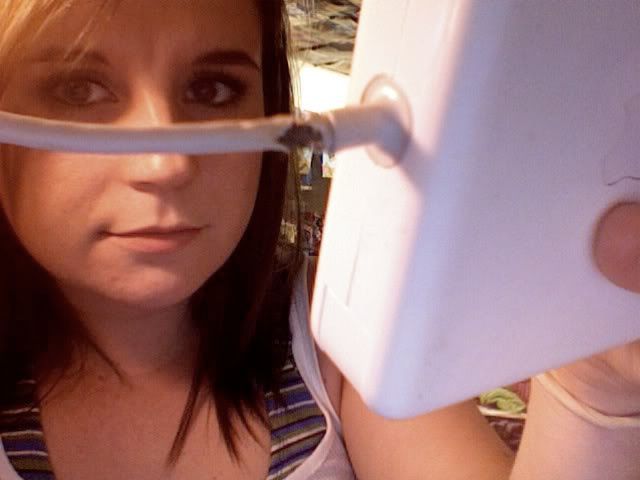
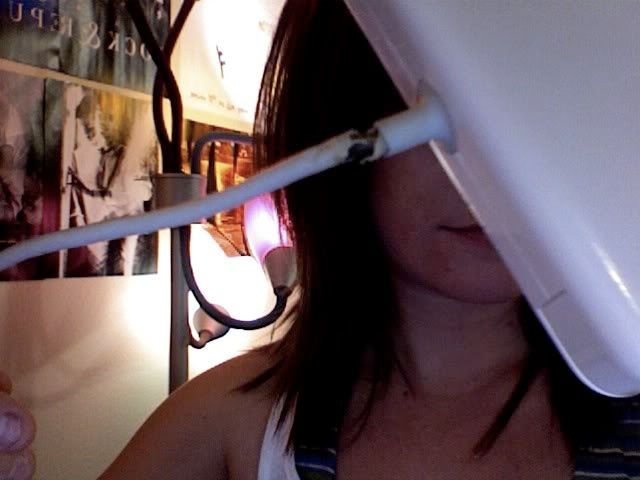
The wings are deceptive, because you would think that if the adapter is designed with this feature, it must be intended to be used. But the problem is that repeated winding and unwinding of the cord around these wings can cause premature wear of the current-carrying wires inside.
As I previously explained, the cord itself is subject to a design flaw--because the ground and live wires run coaxially (one is in the center and the other runs around it), bending the wire in any direction causes tension on one side and compression on the other. This will eventually cause breakage! Note that most two-wire power cords employ either separately insulated wires (these cords look flat, often with a groove running longitudinally), or a twisted design (these are round, but if you slice them open, the wires do not run coaxially).
I believe that the current cord design is a reflection of Apple's decision to put form over function, aesthetics over durability. A traditional flat, grooved power cord looks ugly and is reminiscent of common household appliances. A thin round cable is visually clean. But I have cut open these cords and I can tell you it is an inherently flawed design that is prone to failure. Running 85W through a tubular network of hair-thin wires woven around a central bundle is just asking for trouble. When even one filament breaks, the resulting local increase in resistance creates heat, which in turn softens the insulation, which makes further breakage more likely, causing a chain reaction when multiple breakages melt the insulation and shorts out the cord.
I am not an engineer and even I can tell you that this is precisely the mode of failure that is experienced by this design. The reason why we're seeing it more often at the adapter end or the MagSafe end is because those are the spots that bend the most. If you read the reviews of these adapters on the Apple Online Store, you will find hundreds of posts confirming this.
Form over function is not a rational design approach for a device that carries power, and can be a potential electrical/fire/chemical hazard. (Melting plastic gives off toxic fumes.) Someone can get hurt by this design, and this is what upsets me the most, not the $80 or so that the adapter costs. A product should not, through its design, needlessly expose the user to injury with normal use.
So to reiterate, do not use the wings to wind the cord. Leave the cord loose, do not make sharp bends in it, and use the grounded 3-prong extension cord whenever possible. I had one failure with my old 12" PB G4 adapter--I don't intend to have another.