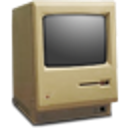
There is only one way to properly repair your Macintosh Plus. Before you start, you ideally need a PDF copy of Apple's official service manual for the Macintosh Plus, which can be obtained if you know where to look. A copy of Larry Pina's Macintosh Repair & Upgrade Secrets is also essential, in my opinion, because it is the only book to this day to detail the correct diagnostic and repair procedures for compact Macintoshes. Used copies of this book can be purchased from Amazon and other retailers online.
You will need to open the case, and you will need a T15 long torx screwdriver to do this. Once the cover is removed, you must discharge the CRT before you proceed any further. By searching on Google you can find sufficient guides on how to properly discharge a CRT. Unlike the SE and later compact Macs, the flyback transformer in the Plus does NOT have a built-in bleeder, which means most of the charge is still there after you power down. The CRT in a compact Mac holds about 9,000 volts. Avoid touching the anode cap, video board, CRT neck and yoke, and the analog board. In the Macintosh Plus, the power supply is exposed on the analog board. This also contains high voltage which is dangerous.
Another way to get rid of most of the charge initially is to turn the brightness to full while the machine is ON, and then flip the power switch at the back to the OFF position. This is a quick and relatively safe way of getting rid of most the charge. Do this, then let it sit for a week, then discharge using the correct procedure. Then you should be safe to proceed to the next stage.
According to Larry Pina's book, no video usually means that you need to resolder the pins on the J4 connector. If this is not the problem, you may need to replace U2 and/or replace the LAG chip on logic board.
In addition to what the book states, I highly recommend capacitor replacement. The capacitors most likely need replacing on your analog board. Capacitor failure is common in machines of this age. Electrolytic capacitors lose capacitance as they age, and can sometimes leak. Replacement components are easy to source and soldering new caps is easy, providing you have at least basic soldering experience. Inspect your analog board carefully for dry solder joints. Also check for golden-colored joints.
If you have a copy of Pina's book, it has component lists in the Appendix for the analog board. If you cannot find a copy of it, I can scan and upload the pages you require to repair your Plus.
Hope this helps, let me know how you get on.