Marshall Amp

Has anyone figured out how to get the settings for a classic marshall distortion sound with a guitar plugged straight into the computer? Any tips would be greatly appreciated
thanks
tmp

Posted on Sep 19, 2005 8:23 PM

Reply
16 replies

Sep 20, 2005 8:34 AM in response to tmp

I'd start with one of the British amp sims. I don't use them, but if I were going to, I'd probably start with the British Clean, then start tweaking the gain to get some grit. When I used to have an early 70s 50 watt stack years ago, I always noticed how extremely clean it was, and that the overdrive was so smooth. I really miss that sound sometimes, and wish I never got rid of it.

Sep 20, 2005 10:45 PM in response to tmp

I keep hearing "Won't Get Fooled Again" on CSI Miami on TV, and wishing I had the capability to get that sound Townsend is getting. Hmmm, was he still using Marshals, then, or had he switched to Hiwatt? Anyway, I love that clean crunch. I remember I could sustain really long, but I had to do it with my fingers. The Marshall really made you work to get that sound, which I also liked. I have always heard the Marshall amp was based on a Fender Bassman. Well, I have a 64 Bassman, and I have yet to get THAT sound out of it.

Sep 21, 2005 9:53 AM in response to Scott Laughlin-Richard

Scott, I did a little searching for your question, and I could not believe I actually found an answer from "the man" himself...

Excerpt from September 1993 Guitar Player

"Guitar players have always known. You get the right Strat. You get the right guitar cable. You plug it into the right old Fender amp and you get the sound. IÂ’m just taking a safe route there. There are lots of other chains that produce great sounds.

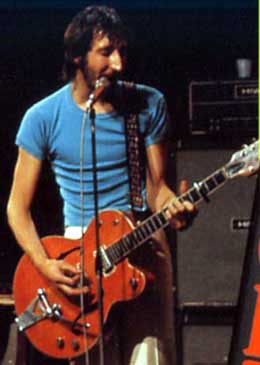
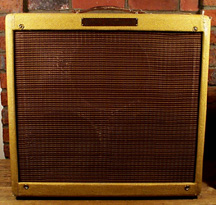
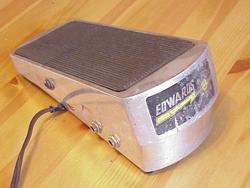
"I remember when I gave Joe Walsh an ARP 2600. He went, [mimics Joe Walsh] 'Pete. I donÂ’t know what to get you in return so I bought you a Gretsch Country Gentleman, like Neil Young uses. I know you donÂ’t really get into them, but you should try this. And I bought you a Fender Bandmaster amplifier with three 10s so the ohmage is crazy, and an Edwards pedal steel volume pedal.'

"I linked it all up, went Ya-a-ang and it was there. When I get those three things out and put them in a chain, itÂ’s a sound from paradise. If I try to [futze] with it and say, 'WouldnÂ’t it be interesting if I took the Gretsch and put it through a Zoom pedal,' it doesnÂ’t work. ItÂ’s got to be just that combination of stuff.

"I’ve still got it. It got broken by accident. I trod on it. It still sounds wonderful. I’ve still got the amp and I often use it. I used it on the album. It’s the same chain, even the same guitar cable — an old Whirlwind."

So, here is what you need (or submit to Variax for modeling)

1959 Gretsch 6120 Chet Atkins
Whirlwind Cable
Edwards Light Beam volume pedal
1959 Fender Bandmaster amplifier with
* Narrow panel, diagonal tweed covering.
* 3 x 10″ /2.6 ohms (8 ohms each in parallel) Jensen speakers.
* 26 watts.
* Two 5881 power valves.

How's THAT for an answer! 😉

Sep 21, 2005 10:01 AM in response to Schneb

Now THAT is interesting. I'd guess that my Brian Setzer Signature 6120 or my 57RI Silver Jet and my 67 Super Reverb might be a similar setup. Not sure how the volume pedal comes into play for this sound. I was thinking that was his SG through either a Marshall or Hiwatt. Funny, as a kid I used to watch Billy Gibbons real close up playing Pearly Gates through a 100 watt stack, and was so sure that is what he used in the studio as well. But i recall reading that he used an old tweed Deluxe in the studio.

Sep 21, 2005 12:32 PM in response to Scott Laughlin-Richard

Well, it's like he said, there is a certain "something" about that combo and if you stray just a tad, boom, it's gone. The volume pedal probably used CMOS chips which were basically solid state tube amps. If overdriven just right, it would provide the perfect "ease-in" to what the Fender would finish. There is also the possibility that there is an impedance mismatch between the pedal and the input of the Fender that creates a unique tone curve.
The odd impedance of the three speakers is also interesting in that it provides different wave modeling at different volume velocities.
It's like a Stradivarius. No one could figure out what made them sound so mellow and good. Scientist think that it was a fungus that penetrated the particular wood. There were other theories. Tone creation is a very interesting science!

If you haven't already, check out this link and choose "Won't get fooled" from the list. Close, but not perfect. But close is good enough for me. 😉

Sep 21, 2005 12:39 PM in response to Schneb

If you listen to the original, you'll see that has too much low end, and way more distortion that the record did. I haven't tried it yet, but I am sure i can get closer than that with some combo of gear I have 🙂

Yep, just plugged in the Setzer, bridge pickup, guitar volume backed off to about 8, and full treble and presence on my Blues DeVille on the drive channel with the gain backed off to about 1/2 and bass down to 1/3, and there it was! I will now have to find a place for this sound! Thanks for making me try it!

Sep 22, 2005 9:15 AM in response to Scott Laughlin-Richard

Well, what it sounded like in the room was not what it sounded like recorded. So I had to tweak it a bit from my original go. I bumped the guitar volume to full, used both pickups, added a bit more bass and mids from the amp. Then it seemed to have the right tone, but wasn't full enough, so I duped the track, and did a slight offset for fullness, and added compression and reverb, If it had bass and drums, I think it would be pretty close, and if I played it a bit better LOL

http://home.mchsi.com/~slr-ebay/WGFA.mp3

This thread has been closed by the system or the community team. You may vote for any posts you find helpful, or search the Community for additional answers.

Marshall Amp

Welcome to Apple Support Community
A forum where Apple customers help each other with their products. Get started with your Apple Account.