iPhone 12 mini is not connecting to the network after my travel

iPhone cannot update to latest software or access network since returning from abroad


[Re-Titled by Moderator]

iPhone 12 mini, iOS 18

Posted on Mar 5, 2025 1:22 PM

Reply
Question marked as Top-ranking reply

Posted on Mar 6, 2025 12:23 AM

You may try some of these steps, please check after each step...


  1. Sometimes, a simple restart can resolve temporary software glitches. Turn off your iPhone, wait for a few seconds, and then turn it back on.
    1. Restart the device. That's it.
    2. Still not solved --> Force restart iPhone - Apple Support
  2. Corporate iPhone Profile Check and Removal Guide
    1. Is this your corporate iPhone? Then please contact the system administrator of your corporate
    2. If it is your device, in that case, do you have any profile installed by your corporate/organization/enterprise/School Management?
      1. Erase the profile added by you If you have installed a profile on your own --> Install or remove configuration profiles on iPhone - Apple ...
    3. Please contact the system administrator of the organization who provided the profile to you
  3. Travel Abroad: If you have just returned from an international trip, it’s a good idea to remove or deactivate any SIM card you were using while traveling. International SIM cards or roaming-enabled SIMs often prioritize connectivity to partner networks, which may not always offer the best service once you're back home. Instead, insert and activate your local SIM card — the one issued by your home country’s network provider. This will ensure you’re connected to the local network, which typically provides better signal strength, faster data speeds, and more reliable service. Additionally, using your local SIM helps you avoid ongoing roaming charges, which can sometimes be costly. If you’re using an eSIM for international travel, you can deactivate it from your phone’s settings and switch back to your primary local SIM for seamless connectivity.
  4. Reset Network Settings: Settings > General > Transfer or Reset iPhone > Reset > Reset Network Settings: Only network settings are removed.
    1. When you reset network settings, previously used networks and VPN settings that weren’t installed by a configuration profile or mobile device management (MDM) are removed. Wi-Fi is turned off and then back on, disconnecting you from any network you’re on. The Wi-Fi and Ask to Join Networks settings remain turned on.
    2. To remove VPN settings installed by a configuration profile, go to Settings > General > Profiles & Device Management, select the configuration profile, then tap Remove Profile. This also removes other settings and accounts provided by the profile. See Install or remove configuration profiles on iPhone in this guide.
    3. To remove network settings installed by MDM, go to Settings > General > Profiles & Device Management, select the management, then tap Remove Management. This also removes other settings and certificates provided by MDM. See “Mobile device management (MDM)” in the iOS Deployment Reference.
    4. Reset your Network Settings. Tap Settings > General > Reset > Reset Network Settings. This also resets Wi-Fi networks and passwords, cellular settings, and VPN and APN settings that you've used before.
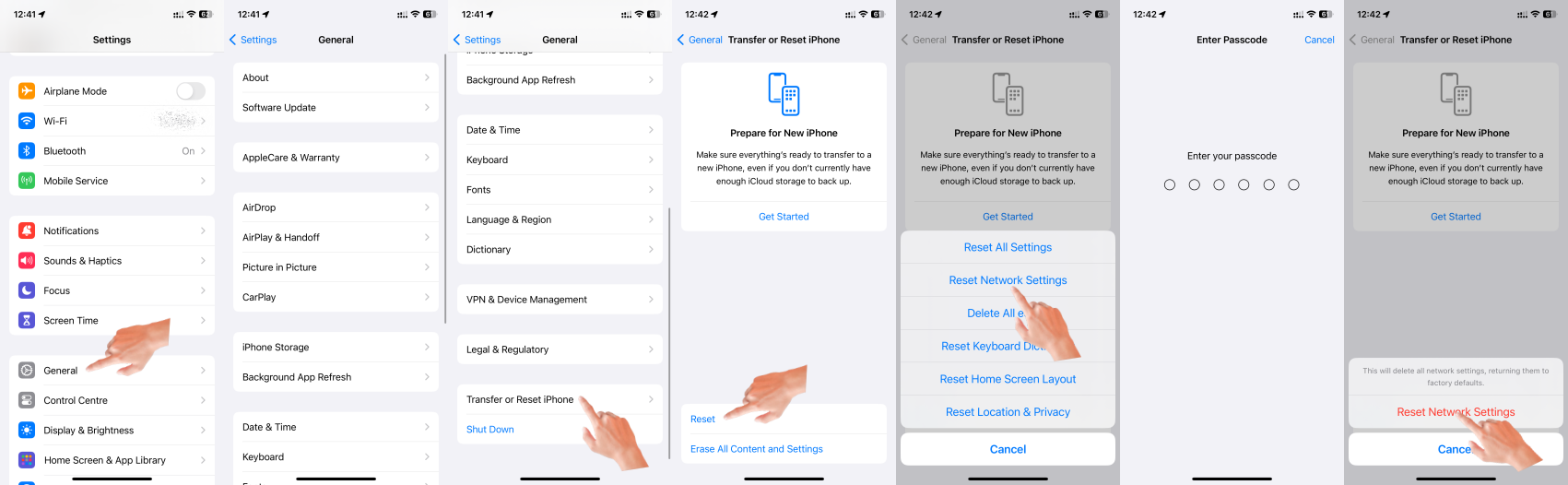
  5. If the issue persists, you can try resetting all settings on your iPhone. This will not erase your data but will reset all personalized settings to their default values. Go to Settings > General > Transfer & Reset > Reset > Reset All Settings and confirm the action. Note that you will need to reconfigure your settings afterward. All settings—including network settings, the keyboard dictionary, the Home screen layout, location settings, privacy settings, and Apple Pay cards—are removed or reset to their defaults. No data or media are deleted.
    1. Reset All Settings: Return iPhone settings to their defaults - Apple Support:- Return iPhone settings to their defaults
    2. You can return settings to their defaults without erasing your content.
    3. If you want to save your settings, back up your iPhone before returning them to their defaults. For example, if you’re trying to solve a problem but returning settings to their defaults doesn’t help, you might want to restore your previous settings from a backup.
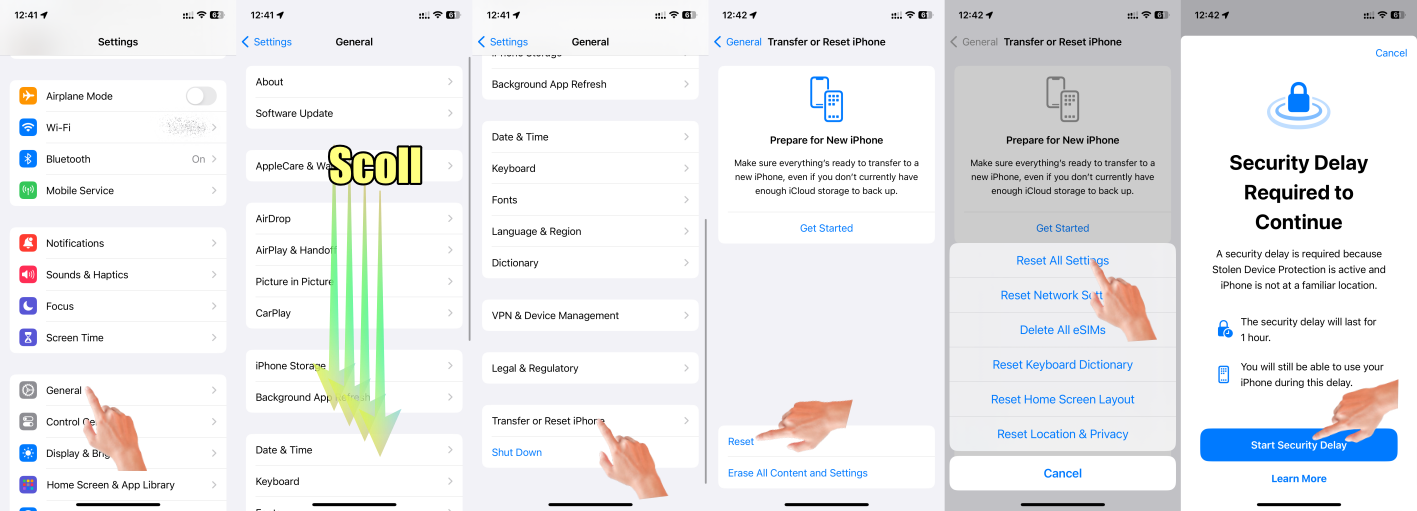
  6. Make sure you have the latest updates installed.
    1. Update Over-the-Air (OTA) —> Update your iPhone or iPad - Apple Support (IN)
    2. Update using iTunes/Finder —> Update your iPhone, iPad, or iPod touch - Apple Support (IN)


If none of the above steps resolve the issue, it is recommended to reach out to Apple Support or visit an authorized service center for further assistance. They can provide specific guidance based on your device model and iOS version.


1 reply
Question marked as Top-ranking reply

Mar 6, 2025 12:23 AM in response to Recentholiday

You may try some of these steps, please check after each step...


  1. Sometimes, a simple restart can resolve temporary software glitches. Turn off your iPhone, wait for a few seconds, and then turn it back on.
    1. Restart the device. That's it.
    2. Still not solved --> Force restart iPhone - Apple Support
  2. Corporate iPhone Profile Check and Removal Guide
    1. Is this your corporate iPhone? Then please contact the system administrator of your corporate
    2. If it is your device, in that case, do you have any profile installed by your corporate/organization/enterprise/School Management?
      1. Erase the profile added by you If you have installed a profile on your own --> Install or remove configuration profiles on iPhone - Apple ...
    3. Please contact the system administrator of the organization who provided the profile to you
  3. Travel Abroad: If you have just returned from an international trip, it’s a good idea to remove or deactivate any SIM card you were using while traveling. International SIM cards or roaming-enabled SIMs often prioritize connectivity to partner networks, which may not always offer the best service once you're back home. Instead, insert and activate your local SIM card — the one issued by your home country’s network provider. This will ensure you’re connected to the local network, which typically provides better signal strength, faster data speeds, and more reliable service. Additionally, using your local SIM helps you avoid ongoing roaming charges, which can sometimes be costly. If you’re using an eSIM for international travel, you can deactivate it from your phone’s settings and switch back to your primary local SIM for seamless connectivity.
  4. Reset Network Settings: Settings > General > Transfer or Reset iPhone > Reset > Reset Network Settings: Only network settings are removed.
    1. When you reset network settings, previously used networks and VPN settings that weren’t installed by a configuration profile or mobile device management (MDM) are removed. Wi-Fi is turned off and then back on, disconnecting you from any network you’re on. The Wi-Fi and Ask to Join Networks settings remain turned on.
    2. To remove VPN settings installed by a configuration profile, go to Settings > General > Profiles & Device Management, select the configuration profile, then tap Remove Profile. This also removes other settings and accounts provided by the profile. See Install or remove configuration profiles on iPhone in this guide.
    3. To remove network settings installed by MDM, go to Settings > General > Profiles & Device Management, select the management, then tap Remove Management. This also removes other settings and certificates provided by MDM. See “Mobile device management (MDM)” in the iOS Deployment Reference.
    4. Reset your Network Settings. Tap Settings > General > Reset > Reset Network Settings. This also resets Wi-Fi networks and passwords, cellular settings, and VPN and APN settings that you've used before.
  5. If the issue persists, you can try resetting all settings on your iPhone. This will not erase your data but will reset all personalized settings to their default values. Go to Settings > General > Transfer & Reset > Reset > Reset All Settings and confirm the action. Note that you will need to reconfigure your settings afterward. All settings—including network settings, the keyboard dictionary, the Home screen layout, location settings, privacy settings, and Apple Pay cards—are removed or reset to their defaults. No data or media are deleted.
    1. Reset All Settings: Return iPhone settings to their defaults - Apple Support:- Return iPhone settings to their defaults
    2. You can return settings to their defaults without erasing your content.
    3. If you want to save your settings, back up your iPhone before returning them to their defaults. For example, if you’re trying to solve a problem but returning settings to their defaults doesn’t help, you might want to restore your previous settings from a backup.
  6. Make sure you have the latest updates installed.
    1. Update Over-the-Air (OTA) —> Update your iPhone or iPad - Apple Support (IN)
    2. Update using iTunes/Finder —> Update your iPhone, iPad, or iPod touch - Apple Support (IN)


If none of the above steps resolve the issue, it is recommended to reach out to Apple Support or visit an authorized service center for further assistance. They can provide specific guidance based on your device model and iOS version.


This thread has been closed by the system or the community team. You may vote for any posts you find helpful, or search the Community for additional answers.

iPhone 12 mini is not connecting to the network after my travel

Welcome to Apple Support Community
A forum where Apple customers help each other with their products. Get started with your Apple Account.