Syncing third generatio

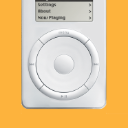
I am having problems getting a third generation IPOD classic (which originally came with a 30-pin to firewire lead) to talk/sync with my current generation Macbook Pro. Although there is no longer a firewire port on the Macbook, I thought that this third generation IPOD was the first with USB connectivity and that I had managed to sync it via USB (albeit possibly with my previous Macbook) before.


However now when I use a 30-pin to USB lead the Macbook just does not seem to "see" any device at all?


Can anyone help with this one and explain what I need to do to get some new music on the old IPOD (which I use on occasion as a back-up to my sixth generation classic which is my main music player)?

iPod classic
Posted on May 3, 2013 2:21 AM

Reply
5 replies

May 3, 2013 3:41 AM in response to ajay67

The 3rd gen iPod was the first one to have a dock connector, but it still needed to be connected to FireWire. It can't get power or charge from a USB connection. Just to confirm, it has a touch wheel (not a click wheel) and a row of touch control buttons that glow orange.


If you still have the square white FIreWire power adapter that also came with this model, there is a way to use it with a USB connection. Apple sold a special cable for this iPod model that had a dock connector at one end, which split off into a USB cord AND a FireWire cord. Here's a third-party version of this cable on eBay


http://www.ebay.com/itm/USB-2-0-CABLE-FIREWIRE-For-APPLE-iPOD-DOCK-Touch-Nano-/1 60946252350?pt=US_MP3_Player_Cables_Adapters


The dock connector obviously connects to the iPod. The USB plug connects to the Mac. The FireWire plug connects to the FireWire power adapter. In this way, the iPod was able to connect through USB for data, while getting power from the FireWire connection. This was Apple's solution for customer who wanted an iPod, had USB 2.0 (not 1.1 which was common), and did not have a computer with FireWire.


Alternately, if you have the FireWire docking cable, you may be able to use Apple's Thunderbolt to FireWire adapter, then adapt that FireWIre 800 port to FireWIre 400, then connect the FireWire docking cable. That's a lot of adapters, but I don't see why it would not work.

May 7, 2013 7:02 AM in response to ajay67

I am not sure that this gets me too far. I have been able to charge the ipod o.k. as I still have the original charging unit, or are we saying that the device needs to be powered up live in some way in order to sych data with the Mac.


Have I got it wrong that it should be able to at least synch music data via the USB port?


Charging is not therefore the problem, but synching with my music library is what is not possible - or is this and the issue with charging perhaps interlinked?


Anyone any hints?

May 7, 2013 11:14 AM in response to ajay67

Apple actually provided that solution, with that special cable (that they no longer sell); it is necessary if you want to use it with a USB port. I believe the reason is because when this iPod model is connected for data syncing, it needs more ongoing power than the battery can provide reliably. When the iPod is operating separately (as an iPod), its hard drive only spins up for short "bursts" to cache song data into memory; it is not spinning continuously like it does with connected to the computer and syncing.


With that special cable, the iPod can use the USB port for data, while the FIreWire port (on the power adapter) provides the power. Since you have the power adapter, all you need is that special cable.


Why would Apple design it this way? When the first iPod was released in 2001, most computers did not have USB 2.0 yet, They had the very slow and (often) low-powered USB 1.1 ports. The first two generations of iPod were targeted at Mac users, who had FireWire on their Macs, which provided high speed data transfer and high power (at a different voltage). iTunes for Windows did not even exist yet.


And that is why the 3rd gen iPod still needs FireWire. The design still calls for it to be connected to a FireWire port, but Apple was transitioning to supporting USB and attracting customers who used Windows. The 4th gen iPod supported both USB 2.0 and FireWire (and iTunes for Windows became available). The 5th gen iPod only supported USB 2.0.

Feb 12, 2014 12:56 AM in response to ajay67

Sorry to bring up this old thread.


I too have a 3rd gen ipod(touch wheel) which I just dug up. As previously mentioned it requires the older power adapter(10V) with its firewire cable for charging. I am able to connect the ipod to my newer macbook(without firewire) via USB and sync. However the battery alone couldn't last more than transfer of 100 songs. I do have the USB/Firewire-to-dock connector cable, but i am unable to charge with the firewire and sync my ipod with USB at the same time.


Am I missing something here??

Feb 12, 2014 2:35 PM in response to ihomme

Using the special cable with both FireWire and USB connections (plus the dock connector at the iPod end), you are connecting the FireWire plug to an Apple FireWire power adapter (at the same time that you are connecting the USB plug to your computer), correct? If you are connecting both at the same time, it should sync and charge (get power) concurrently, so I don't understand why it would have a problem with the battery not lasting "more than transfer of 100 songs." Technically, those old iPods will sync when connected to power, even if you remove the battery.


If you doing one thing at a time (connecting it to power over FireWire OR connecting it USB for syncing), not both, since this is an old iPod and you left its battery in a completely drained state for a extended period, it is possible that the battery is no longer able to hold its charge. That is why it is running out of power quickly, IF it is not connected to FireWire for power WHILE it is syncing.

This thread has been closed by the system or the community team. You may vote for any posts you find helpful, or search the Community for additional answers.

Syncing third generatio

Welcome to Apple Support Community
A forum where Apple customers help each other with their products. Get started with your Apple Account.
