caring for older apple devices?

So I have an ipod shuffle 1st gen, an ibook G4 and am thinking of purchasing an ipod classic 3G but just want to know how to make sure they last as long as possible mainly things such as batteries and basically how to make them last without having to buy replacement parts.

airport-OTHER

Posted on Feb 16, 2016 1:10 PM

Reply
Question marked as Top-ranking reply

Posted on Feb 16, 2016 4:12 PM

Batteries eventually become worn out; even if you don't use the device that often, they deteriorate due to age. The best thing for a battery, if you don't use the device that often, is to "exercise" it. Make it a point to use the device, and drain the battery (then recharge it) at least once a month. Letting a device sit "in a drawer" for a long time (with a drained battery) can cause its lithium battery to no longer hold a charge. And always leaving it connected to power is not that great for the battery either. Replacement battery parts are available online, through sources like Amazon and eBay, even for older iPods. Some iPod models have a simple connector for the battery. Others require de-soldering and re-soldering of wires to replace the battery (usually for smaller devices like iPod nano and shuffle).


Hard drives in iPods also eventually become faulty, like hard drives in computers. They have delicate precision moving parts. Flash-based ("solid state") storage is better for use in iPods. Once the cost of flash-based storage came down, Apple switched to it for iPods instead of continuing with even higher capacity mini hard drives. Those hard drive components are no longer being produced; replacement parts are likely to be scavenged used parts. However, you can buy adapters that allow Compact Flash cards and SD cards (both common flash storage formats) to be used in iPods to replace faulty hard drives.


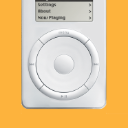
The 3rd gen "classic" iPod (from around 2003) has some limitations. While it has a 30-pin dock connector (like later iPods), it does not charge from a USB connection. It needs a FireWire connection to change and sync. Most PCs (past and present) do not have FireWire, and current Macs don't have FireWire either (although you can adapt a Thunderbolt port to FireWire). There is no such thing as a USB-to-FireWire adapter; if you see one online, it is a scam and may even cause damage to the connected device. There is a special odd-looking cable Apple used to sell (aimed at Windows PC users at the time) that allows connection of 3rd gen iPod to a USB port, to sync AND charge at the same time. It has a 30-pin dock connector, with BOTH a FireWire cable and USB cable coming out of it. The USB connector goes to the computer's USB port. At the same time, the FireWire connector goes to a FireWire power adapter (that came with these iPods). The iPod connects for data through USB while getting power from FireWire.


On the plus side, the 3rd gen iPod has a unique all-touch interface (this was before the click-wheel). The Hold switch is the only control that is not touch-based; important because it was too easy to mistakenly touch one of the playback control buttons, so the Hold switch was actually used. Today's "iPod touch" has more physical controls than 3rd gen iPod. 🙂 It also has excellent sound quality (to my ears).


A more practical old "retro" iPod for use today is the 4th gen iPod and iPod mini. They can connect and charge using USB, and they are the first iPods with the familiar and effective click-wheel interface (iPod mini actually had it first). They have monochrome screens that are easy to read, even in bright sunlight, and without using the backlight in normal lighting. 4th gen iPod sounds slightly better than iPod mini. The "micro hard drive" in iPod mini uses the standard Compact Flash card connector, and can be replaced by a CF card. No adapter needed (unless you want to use an SD card instead).

9 replies
Question marked as Top-ranking reply

Feb 16, 2016 4:12 PM in response to gadgetmansam

Batteries eventually become worn out; even if you don't use the device that often, they deteriorate due to age. The best thing for a battery, if you don't use the device that often, is to "exercise" it. Make it a point to use the device, and drain the battery (then recharge it) at least once a month. Letting a device sit "in a drawer" for a long time (with a drained battery) can cause its lithium battery to no longer hold a charge. And always leaving it connected to power is not that great for the battery either. Replacement battery parts are available online, through sources like Amazon and eBay, even for older iPods. Some iPod models have a simple connector for the battery. Others require de-soldering and re-soldering of wires to replace the battery (usually for smaller devices like iPod nano and shuffle).


Hard drives in iPods also eventually become faulty, like hard drives in computers. They have delicate precision moving parts. Flash-based ("solid state") storage is better for use in iPods. Once the cost of flash-based storage came down, Apple switched to it for iPods instead of continuing with even higher capacity mini hard drives. Those hard drive components are no longer being produced; replacement parts are likely to be scavenged used parts. However, you can buy adapters that allow Compact Flash cards and SD cards (both common flash storage formats) to be used in iPods to replace faulty hard drives.


The 3rd gen "classic" iPod (from around 2003) has some limitations. While it has a 30-pin dock connector (like later iPods), it does not charge from a USB connection. It needs a FireWire connection to change and sync. Most PCs (past and present) do not have FireWire, and current Macs don't have FireWire either (although you can adapt a Thunderbolt port to FireWire). There is no such thing as a USB-to-FireWire adapter; if you see one online, it is a scam and may even cause damage to the connected device. There is a special odd-looking cable Apple used to sell (aimed at Windows PC users at the time) that allows connection of 3rd gen iPod to a USB port, to sync AND charge at the same time. It has a 30-pin dock connector, with BOTH a FireWire cable and USB cable coming out of it. The USB connector goes to the computer's USB port. At the same time, the FireWire connector goes to a FireWire power adapter (that came with these iPods). The iPod connects for data through USB while getting power from FireWire.


On the plus side, the 3rd gen iPod has a unique all-touch interface (this was before the click-wheel). The Hold switch is the only control that is not touch-based; important because it was too easy to mistakenly touch one of the playback control buttons, so the Hold switch was actually used. Today's "iPod touch" has more physical controls than 3rd gen iPod. 🙂 It also has excellent sound quality (to my ears).


A more practical old "retro" iPod for use today is the 4th gen iPod and iPod mini. They can connect and charge using USB, and they are the first iPods with the familiar and effective click-wheel interface (iPod mini actually had it first). They have monochrome screens that are easy to read, even in bright sunlight, and without using the backlight in normal lighting. 4th gen iPod sounds slightly better than iPod mini. The "micro hard drive" in iPod mini uses the standard Compact Flash card connector, and can be replaced by a CF card. No adapter needed (unless you want to use an SD card instead).

Feb 17, 2016 5:44 AM in response to gadgetmansam

It may work to connect it to the FireWire power adapter (using a FireWire docking cable) to charge the iPod, and then connect it to the computer's USB port (using a USB docking cable) to sync the iPod. Keep in mind that the iPod is not able to charge from the USB port, so it is running on battery power. If the battery is weak, this arrangement may not work reliably, and it could result in data corruption occurring while syncing.


Also, you may not be able to do a Restore on the iPod unless it is connected to power. Is the computer you prefer to use for syncing it a Windows PC or a Mac? A Mac can use an iPod whether the iPod's storage is formatted for Mac or Windows. A Windows PC can only use an iPod that is formatted for Windows. Normally, this is not a problem, because doing a Restore takes care of formatting automatically. However, it may be a problem, if you cannot perform a Restore on the computer that will be syncing the iPod.

Feb 16, 2016 7:07 PM in response to gadgetmansam

No, the dock connector serves the same purpose as later iPods (to charge the iPod's battery and sync the iPod). The difference is that it is for connecting to a FireWire port, not a USB port. You use a FireWire docking cable, not a USB docking cable. This iPod was on sale before iTunes for Windows was released; iTunes was only for Mac at that time. The primary audience for the first three iPod "generations" was Mac users; most Mac users had fast FireWire ports on their Macs. USB 2.0 was still somewhat new; the older common USB 1.1 was fine for connecting keyboard, mouse, and printer, but it was way too slow of syncing iPods. That's why early iPods used FireWire instead of USB.


Apple did license a third-party Windows "jukebox" application (called "MusicMatch"), so that Windows users could buy the 3rd gen iPod and use it with Windows. They usually did not have FireWire ports on their PCs; they used the odd-looking two-headed cable (sold separately) that I mention in previous post, to connect to USB (2.0) port and FireWire power adapter at the same time.


When Apple released the iPod mini and 4th gen iPod, iTunes for Windows was available (and the iTunes Music Store also opened). And by that time, USB 2.0 was fairly common. iPod mini and 4th gen iPod can connect using either FireWire or USB 2.0. That's when iPod popularity really exploded, because Windows users became "equal" customers for iTunes and iPod. There was even an "HP" version of the 4th gen iPod and iPod mini; they're the same designs as the "Apple" version, except they are already formatted for Windows (in the box) and have an HP logo next to the Apple logo, on the back.


If you have a FireWire docking cable, you can use it on the FireWire port of your G4 iBook.

Feb 16, 2016 7:46 PM in response to gadgetmansam

I've never tried it myself, but the Thunderbolt to FireWire adapter should work. But it converts to the newer FireWire 800 (9-pin) connector. The FireWire docking cable has a FireWire 400 (6-pin) connector. So you also need a FireWire 800 to FireWire 400 adapter, like this one


http://eshop.macsales.com/item/NewerTech/FIR1369AD/


I have a FireWire 800 port on my Mac, but it has two FireWire 800 external drives connected to it (daisy-chained), and I don't like messing with it. In my experience, FireWire is not as reliable as USB for hot-swapping (plugging and unplugging) devices. So I use one of those odd-looking two-headed USB (for data) FireWire (for power) docking cables. Although it's intended for Windows users who do not have FireWire, it also works with a Mac.

This thread has been closed by the system or the community team. You may vote for any posts you find helpful, or search the Community for additional answers.

caring for older apple devices?

Welcome to Apple Support Community
A forum where Apple customers help each other with their products. Get started with your Apple Account.