Issue with iPadOS 26.2.1. Automatic Upgrade

Has anyone had an issue with the iPadOS 26.2.1 upgrade? Mine was upgraded this morning, and since then my iPad seems to have a mind of its own. Trying to operate the normal functions is very sluggish and difficult, and it will not let me change screens as usual. When I tried to close the screens that were open, they would not move when I swiped across to remove them. They seem to be stuck! Is there a fix to this upgrade because something is definitely wrong with it?

iPad mini (6th generation)

Posted on Jan 31, 2026 7:38 PM

Reply
Question marked as Top-ranking reply

Posted on Feb 1, 2026 5:04 AM

DavidGS11 wrote:

I have a 5th Gen iPad Air, 64GB, 2022, Model A2588. The 26.2.1 update rendered it almost unusable because the storage became full with just a couple of GB left. The IOS and System files take up more than half of the space 35GB, applications about 20GB, all other about 8GB leaving 2-3GB free. As a result it became very slow and some functionality wouldn’t work such as sending photos by email with the message about freeing up storage. But there is very little I could free up! I have freed up enough to get to 7GB free but can’t see how to free up much more.

I don’t recall any warning about the seeming increase in size from about 22GB. I now have a very unsatisfactory iPad that is less than 4 years old.

Does anyone have any explanation or tips to improve?
Thanks David


Regrettably, you are always going to struggle with an iPad that has so little internal storage. The 32/64GB devices are primarily intended for use in Educational settings, or in environments where the ability to store local data on the device is not required. It is perhaps worthy of note that Apple no longer markets iPad devices with so little local storage, the minimum available configuration now being 128GB.


Recent versions of iPadOS will always use available local storage as a cache to improve system performance - within limits automatically managing and reducing its local cache. Some poorly coded Apps may not properly release system resources, leading to memory and storage "leaks", reducing available user-accessible resources - requiring manual intervention...


Per my earlier reply to this thread, if your iPad is not operating as expected, try a forced-restart - as this will often clear an isolated issue, recover "lost" system resources and clear local temporary cache:


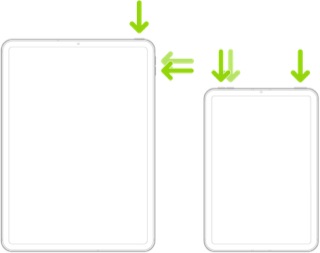
Force restart iPad (models with Face ID or with Touch ID in the top button)

If your iPad doesn’t have the Home button, do the following:

  1. Press and quickly release the volume button nearest to the top button.
  2. Press and quickly release the volume button farthest from the top button.
  3. Press and hold the top button.
  4. When the Apple logo appears, release the top button.


Reported iPadOS (includes Apple Intelligence assets for iPad models that support this feature) and System Files can be expected to occupy in the region of 30GB combined - which for a 64GB device is substantial.


In extremis, fully erasing and restoring an iCloud/iTunes backup can release additional storage. While not a substitute for having adequate local storage, this measure can provide some relief from having too little available storage for your needs.


You will obviously need to ensure that you have a current iCloud or iTunes backup before performing the reset:

How to back up your iPhone, iPad, and iPod touch - Apple Support


When you are happy to proceed, you can perform the reset from iPad settings:

Settings > General > Transfer or Reset iPad > Reset > Reset All Settings


After reset, restore your backup to the iPad:

Restore your iPhone, iPad, or iPod touch from a backup - Apple Support


When the day comes that you consider replacing your iPad with a more recent model, carefully consider your storage needs. You would be well advised to purchase as much internal storage as your budget might reasonably allow - as internal storage (and other hardware) cannot be changed, upgraded or extended. The available internal storage is fixed for the entire life of the device. If you run out of internal storage (as now) for your documents, photos and other data, you will forever struggle and the iPad will become a source of frustration. It is far better to have more storage than you need, than to need more storage than you have.


A good rule of thumb is to quantify how much data storage you will need - add a healthy margin - then double it. If you are unable to quantify your data storage needs, it becomes more difficult. Whilst I and others cannot make definitive recommendations for your personal needs, objectively I would council against purchase of any iPad with any less than 256GB storage, 512GB and higher having a greater margin for growth.


Within the Apple Support Communities we see regular tales of woe and disappointment when storage requirements are exceeded, necessitating replacement of the device; by contrast, we never see complaint of having too much available storage. It is relatively easy to fill limited internal storage space; perhaps consider higher tiers of storage as providing room for growth as your needs develop or mature - potentially extending the useful usable life of the device. 


10 replies
Question marked as Top-ranking reply

Feb 1, 2026 5:04 AM in response to DavidGS11

DavidGS11 wrote:

I have a 5th Gen iPad Air, 64GB, 2022, Model A2588. The 26.2.1 update rendered it almost unusable because the storage became full with just a couple of GB left. The IOS and System files take up more than half of the space 35GB, applications about 20GB, all other about 8GB leaving 2-3GB free. As a result it became very slow and some functionality wouldn’t work such as sending photos by email with the message about freeing up storage. But there is very little I could free up! I have freed up enough to get to 7GB free but can’t see how to free up much more.

I don’t recall any warning about the seeming increase in size from about 22GB. I now have a very unsatisfactory iPad that is less than 4 years old.

Does anyone have any explanation or tips to improve?
Thanks David


Regrettably, you are always going to struggle with an iPad that has so little internal storage. The 32/64GB devices are primarily intended for use in Educational settings, or in environments where the ability to store local data on the device is not required. It is perhaps worthy of note that Apple no longer markets iPad devices with so little local storage, the minimum available configuration now being 128GB.


Recent versions of iPadOS will always use available local storage as a cache to improve system performance - within limits automatically managing and reducing its local cache. Some poorly coded Apps may not properly release system resources, leading to memory and storage "leaks", reducing available user-accessible resources - requiring manual intervention...


Per my earlier reply to this thread, if your iPad is not operating as expected, try a forced-restart - as this will often clear an isolated issue, recover "lost" system resources and clear local temporary cache:


Force restart iPad (models with Face ID or with Touch ID in the top button)

If your iPad doesn’t have the Home button, do the following:

  1. Press and quickly release the volume button nearest to the top button.
  2. Press and quickly release the volume button farthest from the top button.
  3. Press and hold the top button.
  4. When the Apple logo appears, release the top button.


Reported iPadOS (includes Apple Intelligence assets for iPad models that support this feature) and System Files can be expected to occupy in the region of 30GB combined - which for a 64GB device is substantial.


In extremis, fully erasing and restoring an iCloud/iTunes backup can release additional storage. While not a substitute for having adequate local storage, this measure can provide some relief from having too little available storage for your needs.


You will obviously need to ensure that you have a current iCloud or iTunes backup before performing the reset:

How to back up your iPhone, iPad, and iPod touch - Apple Support


When you are happy to proceed, you can perform the reset from iPad settings:

Settings > General > Transfer or Reset iPad > Reset > Reset All Settings


After reset, restore your backup to the iPad:

Restore your iPhone, iPad, or iPod touch from a backup - Apple Support


When the day comes that you consider replacing your iPad with a more recent model, carefully consider your storage needs. You would be well advised to purchase as much internal storage as your budget might reasonably allow - as internal storage (and other hardware) cannot be changed, upgraded or extended. The available internal storage is fixed for the entire life of the device. If you run out of internal storage (as now) for your documents, photos and other data, you will forever struggle and the iPad will become a source of frustration. It is far better to have more storage than you need, than to need more storage than you have.


A good rule of thumb is to quantify how much data storage you will need - add a healthy margin - then double it. If you are unable to quantify your data storage needs, it becomes more difficult. Whilst I and others cannot make definitive recommendations for your personal needs, objectively I would council against purchase of any iPad with any less than 256GB storage, 512GB and higher having a greater margin for growth.


Within the Apple Support Communities we see regular tales of woe and disappointment when storage requirements are exceeded, necessitating replacement of the device; by contrast, we never see complaint of having too much available storage. It is relatively easy to fill limited internal storage space; perhaps consider higher tiers of storage as providing room for growth as your needs develop or mature - potentially extending the useful usable life of the device. 



Feb 1, 2026 4:36 AM in response to Hmmm-mm

You might reasonably anticipate sub-optimal performance for a short period after performing a system software update. Immediately post-update, your iPad will still be running background housekeeping tasks - including reindexing of the filesystem and downloading of additional software assets. This temporary condition should last, at most, for a day or two - after which nominal performance should return.


Otherwise , if your iPad is not operating as expected, try a forced-restart - as this will often clear an isolated or post-update software issue:


Force restart iPad (models with Face ID or with Touch ID in the top button)

If your iPad doesn’t have the Home button, do the following:

  1. Press and quickly release the volume button nearest to the top button.
  2. Press and quickly release the volume button farthest from the top button.
  3. Press and hold the top button.
  4. When the Apple logo appears, release the top button.


If the problem persists after performing the restart, it may be necessary to reset your iPad settings. While this reset will not cause any loss of data, as a precaution, it is always wise to ensure that you have a current iCloud or iTunes backup before performing the reset:

How to back up your iPhone, iPad, and iPod touch - Apple Support


When you are happy to proceed, you can perform the reset from iPad settings:

Settings > General > Transfer or Reset iPad > Reset > Reset All Settings


If the problem still doesn’t clear, the next step is to reset the iPad to factory settings:

Restore your iPhone, iPad, or iPod to factory settings - Apple Support


Otherwise, you would be best advised to seek assistance directly from Apple Support. You can contact the Support Team using the Support link at top-right or bottom-left of this page. Alternatively you can initiate and manage your support cases using the excellent Apple Support App. If not already installed on your iPad, the App can be downloaded from the App Store:

https://apps.apple.com/app/apple-support/id1130498044


You might also visit the Genius Bar at your local Apple Store or Apple Authorised Service Provider (AASP) - where the technicians will be able to test and assess your iPad.

Genius Bar Reservation and Apple Support Options - Apple

Feb 1, 2026 8:28 AM in response to DavidGS11


DavidGS11 wrote:

I ask again, is 35GB normal for this update on Gen 5 machines. Something is not right! If I were able to go back to an earlier IOS (is it?) and not update it appears that my iPad could no longer be supported past 26.2.0 which doesn’t gel with my understanding of Apple long term support, hence my ‘obsolescence’ remark.

I have tried to reduce storage space in user data such as photos and am uninstalling or deleting Apps I occasionally or don’t use. I also have iCloud extra storage but not clear how this helps, if at all. All in all this has freed up about 5GB more space to less than 8GB total which is still not comfortable. I would appreciate advice as to where and how to reduce space consumed by Applications.


Within my first reply to you within this thread, insofar as is possible I have already described the method by which you may ameliorate your seemingly lost storage...


Backing-up and then erasing the iPad, followed by restoring the backup, will recover slack-space and fragmented local storage - and remove unnecessary cached data.


Feb 1, 2026 12:14 AM in response to Hmmm-mm

I have a 5th Gen iPad Air, 64GB, 2022, Model A2588. The 26.2.1 update rendered it almost unusable because the storage became full with just a couple of GB left. The IOS and System files take up more than half of the space 35GB, applications about 20GB, all other about 8GB leaving 2-3GB free. As a result it became very slow and some functionality wouldn’t work such as sending photos by email with the message about freeing up storage. But there is very little I could free up! I have freed up enough to get to 7GB free but can’t see how to free up much more.


I don’t recall any warning about the seeming increase in size from about 22GB. I now have a very unsatisfactory iPad that is less than 4 years old.


Does anyone have any explanation or tips to improve?

Thanks David

Feb 1, 2026 6:02 AM in response to DavidGS11

DavidGS11 wrote:

Thank you for your reply and I will give it a try.

However, please note that this was an automatic update. If my iPad is unsuitable for it, it should not have been offered or possible as I think is the case for much older iPads. This one is less than 4 years old! No one, least of all Apple Store, ever mentioned such machines are intend for ‘educational settings’ far from it. I moved years ago to Apple because of the support but if Apple are moving to built in obsolescence I may need to consider other less expensive options.

My wife has a 4th Gen iPad Air, also 64GB, 2020. It has also updated to 26.2.1. I tried to stop it, but it had already downloaded. But there is no such problem, the IOS and System Data occupies 22GB, whilst for mine it is 35GB. Is there an issue here, why the difference.

Thanks in advance for response
David


At no point did I suggest that the iPadOS 26.2.1 update was unsuitable for your iPad.


Likewise, your suggestion of planned obsolescence by Apple is misplaced. While all Apple devices ultimately have a mainstream support horizon (actually an industry leading five to seven years), Apple does not engage in planned obsolescence of its devices. To the surprise of many, Apple have in last week published system software updates for a broad range of its legacy and obsolete devices, some of which were released 14 years ago!


That said, I did intend to offer constructive council as to the relative risk of choosing base-model devices with minimal internal storage. iPadOS has commendably evolved over recent years to better utilise available system resources - however, this development has impacted devices that have relatively little internal storage - developments that were perhaps not envisioned when the devices were being designed. It is for this reason that I have attempted to offer both advice and technical explanation.


As to the differences of yours and your spouses iPad, they are different models with inherent differences in technical specifications. It is inevitable that your usage patterns and saved data will not be identical. Beyond this observation, without opportunity for detailed analysis, it is impossible to offer an authoritative explanation as to any differences that you may observe.


To reiterate, choosing a minimal storage configuration is often false economy that can lead to unexpected consequences. You can never have "too much" local storage, but having "too little" storage is easy. I hope, at least, to have encouraged informed consideration of your current and future storage needs - regardless of any choices that you make of computing device or device manufacturer.

Feb 1, 2026 5:33 AM in response to LotusPilot

Thank you for your reply and I will give it a try.


However, please note that this was an automatic update. If my iPad is unsuitable for it, it should not have been offered or possible as I think is the case for much older iPads. This one is less than 4 years old! No one, least of all Apple Store, ever mentioned such machines are intend for ‘educational settings’ far from it. I moved years ago to Apple because of the support but if Apple are moving to built in obsolescence I may need to consider other less expensive options.


My wife has a 4th Gen iPad Air, also 64GB, 2020. It has also updated to 26.2.1. I tried to stop it, but it had already downloaded. But there is no such problem, the IOS and System Data occupies 22GB, whilst for mine it is 35GB. Is there an issue here, why the difference.


Thanks in advance for response

David

Feb 1, 2026 6:54 AM in response to LotusPilot

I am well aware of Apple support which is why all our devices are Apple for the last 25 years. I am also well aware of the need to plan for storage when buying which is why my new iPhone is 125GB. But a 4 year old device should not be so affected; at that time 64GB was more than sufficient for our purposes, as advised by Apple. We don’t game, stream, nor store many photos/videos, but I guess AI is the new issue that may be at play.


You have postulated that the update on my wife’s machine is different and it does seem more appropriate for that 4th Gen 64GB machine; why then is it not so for a 5th Gen 64GB machine that is obviously unsuited to an update consuming 35GB. As you see from the photo below, there is very little space occupied by user data, ie photos, mail, books, etc


I ask again, is 35GB normal for this update on Gen 5 machines. Something is not right! If I were able to go back to an earlier IOS (is it?) and not update it appears that my iPad could no longer be supported past 26.2.0 which doesn’t gel with my understanding of Apple long term support, hence my ‘obsolescence’ remark.


I have tried to reduce storage space in user data such as photos and am uninstalling or deleting Apps I occasionally or don’t use. I also have iCloud extra storage but not clear how this helps, if at all. All in all this has freed up about 5GB more space to less than 8GB total which is still not comfortable. I would appreciate advice as to where and how to reduce space consumed by Applications.


Thank You

David


This thread has been closed by the system or the community team. You may vote for any posts you find helpful, or search the Community for additional answers.

Issue with iPadOS 26.2.1. Automatic Upgrade

Welcome to Apple Support Community
A forum where Apple customers help each other with their products. Get started with your Apple Account.