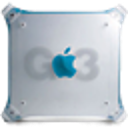
Best OS for b&w G3?

Hello,
I am considering upgrading the OS on my G3. I am currently using OS9.
Which is the most suitable OS for a b&w G3 350 MHz rev 1.?

I would like to use Tiger however I am wondering if Panther might run any better on it.

I have a 250 GIG hard drive (will be reformatting it fort clean instal) and 768 RAM on my b&w G3. I also have an internal DVD reader/writer installed.

Could anyone offer any suggestions for an OS?

My applications are mostly some of Adobe Creative Suite (Illustrator), word processing (MS Office) and internet surfing.

Thanks

g3 b&w, Mac OS 9.2.x

Posted on Jan 27, 2006 2:27 PM

Reply
20 replies

Jan 27, 2006 2:41 PM in response to rainforest

I asked this same question a few months ago regarding my G4 AGP 400 with 512MB RAM. Most of the replies said 10.3.9 Panther. So I went that way & everything works fine. Most of the replies said 400MHz was too slow for Tiger.

I have 2 HDs, each partitioned. On the main HD I have OS 9 & X on separate partitions. Same for the backup HD.

You may have to upgrade the firmware before installing OS X.

Cheers, Tom

Jan 27, 2006 6:35 PM in response to rainforest

I have your machine, and it's running 10.3.9. It is really sweet. However, you need to decide if you want to update your other software to run in X or not. That would be a deciding factor for me. It could be $100s to $1,000 of dollars. Or you could run them in classic, of course, but some people don't like that. They say there is a lag. I don't know. Most of my apps are for X. I do play some games in classic and there is not that much difference.

I suggest 10.3.9 in the end. But if you have to $100s or $1,000s on updating software then I'd go for a "new" mac with Tiger already on it and see if you could have them get you a deal on some of the software you need. Bundle it.

Jan 30, 2006 11:53 AM in response to rainforest

I'm running Tiger on mine and rarely have any problems. Along with Tiger my processor is sitting at 400Mhz, which I will upgrade soon. I do have a question for you though? You said you had a 250GB hard drive with a rev1 board. What I want to know is if your computer recognizes all 250GB, b/c when I went to upgrading everything is mine, I bought a Seagate 160GB HD and it only recognizes 128GB. If you you do get full capacity on your HD, how?

Jan 30, 2006 5:11 PM in response to Already Taken

Thanks everyone for all the responses. I have followed this issue for a month or two now by reading similar posts. From all the posts I have read it would seem that Tiger would run fine on a 350 MHz G3. I have heard many people say that Tiger is too slow for a G3 however I have read more posts from people indicating the opposite. Therefore I must conclude that Tiger is a fine operating system for a 350 MHz G3 and that comments about Tiger being too slow on a G3 must be just guesswork without real testing and comparisons. The Tiger Dashboard and wigits are some other beneficial Tiger features that should be considered. If there is any loss of speed or performance of Tiger on a G3 it probably isn't enough to rule out running Tiger altogether. I will think about it some more however at this point I am considering Tiger as the best OS for a 350 MHz b&w G3.

The issue of the compatibility of the applications is a good point too. The apps I will be loading onto this system are already OSX compatible. I will be buying a new mac soon anyways for my design apps and the G3 will become the family computer with Tiger.


Here's some info for Already Taken regarding how I installed my 250 GIG hard drive in my rev 1 G3. I first researched this issue on the internet. I bought a Hitachi t7k250 SATA drive. (It is a SATA 2 drive. The benefits of SATA 2 over SATA 1 may not be realized with my setup today but might show a slight advantage later in some situations). By the way, there was no cost difference between buying a SATA drive versus the older ATA standard and so I decided to buy SATA. I also chose SATA because, then, when I buy a new G5 (or whatever they will call the new intel power mac) I will be able to bring the drive with me because all the new macs use SATA rather than ATA (also known as PATA). Then you need a controller card. Regardless of whether you choose SATA or ATA, you must buy a controller card so that you could break the 128 GIG barrier of the b&w G3 (I think only the rev 1 has this limit)

I bought a FirmTek SeriTek/1S2 SATA controller card from firmtek for only $69.95. It is a 2 Internal SATA Port card:
http://www.firmtek.com/seritek/seritek-1s2/

I chose this card because it has OS9 as well as OSX compatibility with no need to install any drivers. I feel it is the most mac compatible card because of this.

Now I am going to diverge a little from the original question: Firmtek sells many other great SATA cards such as one with 4 ports (2 ports internal plus 2 external). Then you could attach an external SATA enclosure such as this nice unit:

http://www.iocombo.com/product/showproduct.php?productid=0EGD&PHPSESSID=3c41735b f27252cf17a17350cb603e0e

to one of the 2 external ports and you have an external portable plug and play harddrive that may also function as a backup solution. (Also has USB and firewire if you need that too) This is a solution that is superior to an external firewire hard drive in three ways: cheaper, more versatile and faster speed. SATA is a slightly faster interface than firewire. You will also need to buy a SATA hard drive for it too but still, when you add up the cost of this enclosure plus a SATA drive it still comes out less than buying a firewire hard drive.

There is one more complication that needs to be addressed with the G3 and that is 3 of the 4 PCI slots on the G3 have a 53MB/sec bus speed limit. The fourth PCI slot that is used for the video card does not have this limit (I think it is 66MB/sec). Therefore to overcome this issue, the most common solution (the only solution I think) is to use this fourth slot (the 66MB/sec slot), the video PCI slot, to plug in the controller card for the hard drive. Then move the video card to one of the other 3 slots. You will loose about 10-15% of video performance but this is a small sacrifice to make for the benefit of a speedier more responsive hard drive.

http://www.amug.org/amug-web/html/amug/reviews/articles/firmtek/

I will probably partition my 250GIG drive into two partitions: with 70 GIGS for the OS, apps and photoshop scratch disk area and then the remaining partition (180 GIGS) will be for the data (all my files).

Hope this info helps! PS. I haven't set this up yet. All the parts just arrived and I am looking forward to installing this new harddrive.

🙂

Jan 30, 2006 5:33 PM in response to rainforest

The specifications for maximum transfer speeds certainly are impressive for FireWire 800, SATA and similar sexy latest and greatest interfaces.

Most mere mortals are not using them with drives that can produce data anywhere near that fast. You did not mention the speed (RPM) of your 250 GB drive, but a 10,000 RPM can only produce a burst of data at about 50 MB/sec, and that is not sustainable.

You need not give up your fast graphics PCI slot for a sATA controller. Unless you are using these fast interfaces with multiple very fast drives, you are paying for performance numbers that will not be realized in day-to-day operation in most systems.

Jan 30, 2006 6:30 PM in response to Grant Bennet-Alder

I have read many posts from many sources including barefeats.com and it is common advice on all these sources to use the faster PCI slot and to move the video card to the slower PCI slot but does this only refer to the use of 10,000 RPM drives? I wonder if this only matters if you have a 10,000 RPM drive? My drive is 7200 RPM. I hope it might take advantage of the faster 66 slot. Do you think so? Even just a little? I was convinced that it was a good idea to move the controller card to the 66 slot because of all the posts I read about this. Yes, I am aware the RPM is a bottleneck but how much it is, is the question.

Good point Grant. You might be right. I am not sure however. I do question your 10,000 RPM burst speed figure of 50MB/sec. I still think that there is a good chance that yes there is a slight speed advantage using the hard drive PCI controller on the 66 slot - even if it is slight. I read SATA drives transfer between 45 MBps - 65 MBps - not sure if this is burst speed or sustained transfer or if this pertains to 7200 RPM or 10,000 RPM drives.

From an apple discussion posting:
"There is a bug in the PCI controller that limits write speed to 53MB per second. There is a workaround, using the 66MHz (video card) slot for the drive controller card. This slot doesn't have the "bug", but the card MUST be rated for a 66MHz slot."

http://www.amug.org/amug-web/html/amug/reviews/articles/firmtek/


"If you are installing the SeriTek/1S2 Host Adapter in a PowerMac G3 or G4 any of the PCI slots will work. However, in the "Yosemite" (Mac G3 "Blue & White") or "Yikes!" (G4 with PCI rather AGP graphics), the SeriTek/1S2 card works best in the 66 MHz PCI slot. (Note: move the graphics card into a 33 MHz slot and the SeriTek/1S2 in the 66 MHz slot. SeriTek/1S2 will utilize the 66MHz PCI slot much better than the ATI graphics cards.) The thin cables provided with this SATA interface are really nice for increasing airflow in a PowerMac with three to four drives installed. When you setup a RAID 0 configuration, the SeriTek/1S2 controller provides significantly increased drive performance on the "Sawtooth" (Original G4 AGP), and the G4 Gigabit Ethernet PowerMac."

Anyhow, thanks for your thoughts Grant. You always seem to have some helpful advice regarding hard drive speeds and data transfer speeds. Thanks again!

I am still not 100% sure if I should swap my video card from the 66 to one of the 33 slots. Most posts I read have indicated that yes, it is the faster overall solution to better overall performance for a G3. I'll have to think about this however at this point I am going to follow the advice of barefeats and put the video card on the 33 slot and use the 66 slot for the hard drive controller. I might even try it like that for a week and then switch it back to see if I can tell if there is any difference.

Thanks Grant!

Jan 30, 2006 6:38 PM in response to rainforest

The reason I question the 10,000 RPM burst speed of 50 MB/sec is because I read somewhere else that SATA drives can transfer data at 45 - 65 MB/sec. I am sure in that figure they must be including many 7200 RPM drives. There also must be other factors to consider too such as the interface and of course the RPM. I could be wrong about all this but just thought I would share my understanding of what I have read in the hopes someone would correct my understanding.

Jan 30, 2006 8:13 PM in response to rainforest

I am sure in that figure they must be including many 7200 RPM drives.

Those numbers are for the fastest drives made today, not for 7200 RPM drives.

Also, who is doing the writing, advocating giving up graphics speed for hard drive performance? I expect it is guys who are building super fast RAID arrays with 15,000 RPM drives. Not typical users.

It is true that transferring data TO a drive can proceed faster, because the data is written to the cache initially. But the operation is not complete until the data has been written to the platters, and so you spend nearly the same amount of time waiting for the disks to spin so that the data blocks can come under the write heads.

The way to tell is to look at the specs for the drive you are using. The fastest speed at which it can transfer from the disk to its cache is generally specified, in bits per second. If you divide by 8 to get bytes, that is the fastest burst speed. Steady state is substantially lower.

If you want to pursue it, i invite you to post the make & Model of your drive and I will help look up its transfer times.

Jan 30, 2006 8:45 PM in response to Grant Bennet-Alder

Thanks Grant,

My drive I just bought is an Hitachi Deskstar T7K250 250GB SATA II Hard Drive, 7200 RPM, 8MB Buffer, Model: 0A31636 / HDT722525DLA380. (It was $110.98 at Directron.com)

I wonder how fast it is capable of writing.

I think you are right. Barefeats often writes about raid setups.

I have seen people post drive results and I think they must be using some sort of drive testing utility that measures and displays results in chart form. Not sure where I could find one of those utilities. I might look another time. Anyhow, thats the drive I have.
If you have time to look at any specs I would be interested but if you are busy, no problem. Interesting info. I suppose 15,000 RPM must be SCSI. Never thought any drive had that capability. I guess you learn something new everyday!

Thanks again Grant 🙂

Jan 31, 2006 5:54 AM in response to rainforest

Hitachi has an index page of specs for that drive:

http://www.hitachigst.com/tech/techlib.nsf/products/Deskstar_T7K250

The fourth item will download is a 2-page .pdf that has the numbers in it:

Deskstar T7K250 DataSheet

Performance:
Data buffer 8 MB
Rotational speed (rpm) 7,200
Media transfer rate (max. Mbits/sec) 843.2
Interface transfer rate (max. MB/sec) 133 300
Sustained data rate (MB/sec) 67.8- 32.9 (zone 0 - 29)
Average seek time (ms) (read, typical) 8.5

The sustained data rate is listed as 67.8 MB/sec BEST CASE (which would typically be on the inner tracks where the bits are closest together), to 32.9 MB/sec.

The maximum media transfer rate is a burst at 843.2 MB/sec [divided by 8 gets a ballpark number of 105.4 MB/sec, which I expect includes extra bits for error-correction code support].

Although there is no way to generate data at 300 MB/sec, they happily tout this drive as capable of 300 MB/sec data transfer rate with sATA interface.

This new drive's data rate is faster than I expected. Its typical data rates are generally under the 53 MB/sec you mentioned as a limit for "standard" PCI slots. It is not at all clear that one should give up the only fast PCI slot for it.

Jan 31, 2006 12:50 PM in response to Grant Bennet-Alder

...This new drive's data rate is faster than I expected. Its typical data rates are generally under the 53 MB/sec you mentioned as a limit for "standard" PCI slots. It is not at all clear that one should give up the only fast PCI slot for it...

If it helps, when I transferred my ATA-66 card and drives (ATA-100) from my former B&W (using a 33MHz slot) to my current G4, the benchmarks went up 30%.

Jan 31, 2006 4:31 PM in response to Dave Hamilton

Thanks a lot Grant for this helpful info and the perspective on how to decipher this data. Yes, I think you are right that the sustained data rate capability of this drive is close (or close enough) to the 53 MB/sec limit of the 33MHz slot, such that one could justify continuing to use this 33MHz slot for the hard drive controller and not suffering much (if any) loss in potential hard drive performance. However if one decided to use the 66MHz slot for the hard drive controller you will be sure to benefit from those few times when the hard drive transfers data faster than 53 MB/sec (only up to the hard drives maximum of 67MB/sec) which, as you mention, may likely not happen too often. And of course, then you have to move your video card from the 66 to the 33MHz slot and sacrifice 15% of video card performance. May not be worth it. I think my conclusion is that it can go either way. Neither way would be any drastically better than the other. I might give it a try both ways and see if I notice any difference - just for fun. I might first try the hard drive controller in the 66MHz slot for a week or two and then switch it back over to the 33MHz slot and see if I can notice any difference. Might be interesting - but possibly won't make too much difference because *on the average* the hard drive is running around 50 MB'sec anyways.

Thanks again Grant!

I suppose I should also be careful about posting advice which I am not 100% sure of. And so thanks for keeping this post more factual Grant 🙂
(I was just reciting info that I had read in other places on the net). I'll be more careful next time to state that these could be just personal opinions.

And Dave, thanks for your comment too about your experience with the G4. Interesting.

Mike

Jan 31, 2006 5:06 PM in response to rainforest

"to generate data at 300 MB/sec...."

I read some discussion somewhere on the internet about this in regards to the benefits of SATA 2 (SATA 300) over SATA 1 (SATA 150) and the fact that there are only a few cards that support SATA 2. Can't recall the details and facts though. I wonder, if in the future, more cards will be SATA 2 which might be able to manage more than 150 MB/sec on certain systems and setups. If that is the case, which I don't know if it is, then there could be some future benefits to a drive on a setup that can generate 300 MB/sec - but most likely not today. And so today I wouldn't pay any more cost for the SATA 2 feature of 300 MB/sec on a hard drive however if the 300 MB/sec feature came with the drive, that could be a bonus for the future - but only if your card supported it.

Jan 31, 2006 7:31 PM in response to rainforest

We are at an interesting point in Hard Drive technology. Manufacturers will soon be making the transition to more closely packed "Vertical" magnetic domains on a new kind of disk -- at least for their fastest, most expensive drives. That could send data rates much higher, provided they can produce Hard Drive controller chips to run fast enough to decode that data.

After an adjustment period, this may mean cheaper drives, or faster drives, or both.

Right at the moment, the specs on high-end transfer technology far exceeds the drives available to fill up those fast pipes.

This thread has been closed by the system or the community team. You may vote for any posts you find helpful, or search the Community for additional answers.

Best OS for b&w G3?

Welcome to Apple Support Community
A forum where Apple customers help each other with their products. Get started with your Apple Account.