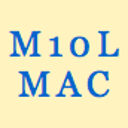
IF not too late, I will try to explain the philosophy of diacriticals. Basically, there are two ways:
- with so-called precomposed characters, i.e. chars which contain both the basic letter and the diacritical mark in one, unicode-encoded, char; this applies to chars used in languages based on the Latin alphabet, e.g. ř (Czech), ė (Lithuanian), ș (Romanian) etc.
- as, for various (mainly) linguistic and dialectal use, the number of precomposed chars is limited and, at a given moment, stopped by Unicode, the other solution is to write the basic char then add the diacritical mark, below or above, or even put more diacritical marks, 2 or 3, sometimes needed.
Your problem is, therefore, that—in your list—only a with macron, i.e. ā, is available as a precomposed char, the others must be achieved by typing the basic letter then macron above. This requires that both the application and the font be capable of doing this. If the font is missing the unicode block named combining diacritical marks, you cannot do that. Lucida Grande is that font, but there are others.
Your problem is then the keyboard layout capable of doing that. As the solution offered by Apple was not satisfactory for me (non-mnemotechnical and not covering all my needs) I created my own keylayout, labelled US Academic. It should be updated, some recently added chars are missing, but it will cover your neeeds. Alternatively, use Char Viewer to add the macron, a particularly tedious work. I know, some abhor dead keys, I like them, because—once mastered—they allow a fast use of diacritical marks. Consider that nobody needs all diacritical marks, but several, which may be easily memorized. In my keylayout, macron (line) below is option-a and macron (line) above is option-shift-a. Therefore, type c then option-shift-a = c̄; similarly, s̄; p̄; ā; x̄; q̄
True, you must exercize the use of such keylayout, but—once mastered—is a piece of fast work.
Some keylayouts are available free here:
http://www.unibuc.ro/e/prof/paliga_v_s/soft-reso/
Note that Pages is worse in dealing with CDMs than, say, TextEdit:


Therefore, if you need such pieces of linguistics, if TextEdit is too simple, Nisus or Mellel do a better job (the former with any appropriate font, the latter with OpenType fonts only).
Hope this has been useful to all those interested.