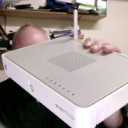
that's called WiFi 5 now, right?
https://www.duckware.com/tech/wifi-in-the-us.html
Sort of mostly but not quite. It is fairly difficult to get a clear view since wireless networking has always been built on the biggest numbers the marketing department could find and every manufacturer plays that game in a cold war type escalation until it all means next to nothing.
Marketing still = snake oil sales.
Even the Engineers completely bungled IMHO calling the wireless version AC which universally means Alternating Current.
so does that mean my home network is already running on the same speed that I'd get by replacing the TC with a newer WiFi 5 router? No point in getting a new router? Our TC is a few years old at least.
If your TC is the tall model that came out in 2013 it is indeed AC wireless and is capable of max link speeds of 1300Mbps.
Before you go into raptures about that wifi exceeding gigabit wired network, in real world it is 2-3x slower at BEST cf ethernet. It is half-duplex which means divide by 2 since wireless cannot tx and rx at the same time. Ethernet can. Which means, using marketing speak, gigabit is really 2000Mbps.
But wireless is shared. So total bandwidth is say 400Mbps Max and the more devices that share it the less efficient it becomes. So 10 devices sharing 400Mbps is not 40Mbps each (say all are trying to get access at the same time).. but a whole range of speeds with the Max throughput now 300Mbps due to inefficiency of collision environment. Ethernet can handle multiple clients at full speed, although max throughput is still gigabit on any one link.
Age is a factor.. as wireless routers age their wireless output drops.. This happens faster or slower depending on quality of components.. my Apple Time Capsule.. I have 2 at the moment and up to 4.. vary tremendously. That means range is going to drop off. And range on the TC was never up to the standard of some better brands.
The first thing to do in figuring out if it is time to replace wireless routers is put hard numbers to fuzzy grey world of invisible wifi.
What the actual speed is like at each point around the house. You can download wifi analyser software for most OS and it is built into Mac wireless diagnostics.. although that does not tell you link speeds.
Here is netspot.. free version.. not so pretty but has the details.

Now to interpret the chart.. the wireless output is used as chart key.. so highest signal first followed by each one that is discovered.
I have a large house which needs multiple Wireless Access Points.
The Asus RT-AC88U is my main router in the next room. It has signal level like most routers would have right next to the computer. Just to show what the Apple is like.. it is sitting near the Asus.. It's SSID is tc5e and you can see wireless signal is at least 10dbm less than the Asus.. not a problem in the same room.. big problem as you get further away.
To show the contrast I have a synology router at the other end of the house connected by ethernet back to the Asus. This covers that area of the house. From the point where I am measuring the Synology signal is -70db on 2.4ghz and -83db at 5ghz.. this is near to useless even on 2.4ghz. You need -60db min and really up near -40db to get high speed on 5ghz. You also see 5ghz suffers worse signal loss passing through walls and floor. This is expected.