An error occurred preparing the software update - Big Sur

I tried to do the Big Sur update and near the end of the installation i get the message


"An error occurred preparing the software update "


and then i'm asked to select a startup disk.


I've tried rebooted a few times and it always happens.


I assume i'll need to do a recovery of some sort.


I tried to reboot with CMD+r and then i was asked to enter the user password, which wasn't accepted (even through it's definitely the correct password).


Can anyone suggest what i should do next?


MacBook Air

Posted on Nov 14, 2020 4:15 AM

Reply
Question marked as Top-ranking reply

Posted on Nov 19, 2020 10:19 AM

I contacted Apple and got it to work. It’s because the computer doesn’t have enough space. So back up your laptop to an external hard drive and free up space.


to bypass the update and go back to regular log-in:


turn the computer off by holding down the power button


press and hold the option button BEFORE turning back on the computer


keep pressing option and turn the computer on

once the computer is on, you should be at the screen that says 2 options for Mac


select Mac HD

log into your wifi

now it should start up again and log back to Home Screen.


211 replies

Feb 2, 2021 6:33 PM in response to dddeeennn

Hi dddeeennn,


Restoring from backup means that once you have a time machine back up you can restore your data from the previous back up.


I would do a time machine back up and then try seeing if you can download the installer for Big Sur either from the app store or the direct link normally from your own user account. delete the previous installer for MacOS Big Sur from your applications folder or drag it to the trash.


Run the installer and see if you get the same error, if you do, try running the installer again from safe mode


Report back and then I'll provide more instructions. Step by step and don't want to overwhelm you.


Hope this helps.

Feb 3, 2021 9:13 AM in response to LizethBo

Hi LizethBo,


What you need to do is boot off of a USB stick of MacOS to try to restore from back up to Catalina if you can. You might need to use a second Mac to create the USB stick.


Once restored, you need to create a new container in the APFS volume for the installation. Download the installer again under Catalina and it should allow you to install on the other volume.


Hope this helps.

Feb 4, 2021 1:10 PM in response to tartangear

I encountered the same error. This appeared because of the lack of space on my Mac, so I had to buy two external HDDs. To one HDD I had to install the Big Sur, to the other I could save all my data in TimeMachine. After that I could erase all data from the computer, install the Big Sur and set back everything from Time Machine. I hope this helps you as well.

Feb 5, 2021 2:13 PM in response to Soren Pearson

Hi Sören


I thrown away the paper where I noted all the steps I think. I am away from home currently and just have my ipad with me. From memory though🤔 this is what I remember. If you can’t install Big Sur yet, dont worry because it will be a long tedious task and depends a lot from your internet speed too and the firewall on the router. Switch it off. That’s the first point I want to make.

It took me at least two afternoon to solve the problem. That’s how tedious it can be so be patient.

  • Restore your current version of MacOS and create a backup on an external hard drive. (I was lucky enough to have a spare one of 1TB)
  • format your external hard drive first and wipe it off before, rename it “Backup”
  • Once your computer is backed up go to disk utility and erase and format your HD drive on your computer (format it to MacOS journaled I think)
  • Once done, go back to MacOS utility and select install MacOS via internet is you dont have the disk
  • One important thing to remember. If passwords don’t work it’s probably because you have more than one account with Apple. So choose the one you use the most often. If you have a smartphone, reset your password on the most use Apple account and when prompt for your password on Apple Store for updating; you password should be accepted. Also the way you will login to your computer will change too. With BigSur , to log in on your computer they will ask for your Apple account password (the one you just changed), it wont be an admin password. I suppose you can change this once you are log in the computer, personally I didn’t as I’m the only user.
  • Once MacOS installed, search for update and leave the computer updating to the last version of MacOS. It might go straight to Big Sur.
  • Once Big Sur is installed, restore your backup by choosing the files you want back on your computer.


Hope this helps. I had no issue updating Big Sur since installed apart being lengthily due to living in rural area and having a crap wifi.


I will be back home on Monday so I will look for the paper with my notes. Meanwhile try these steps over the weekend and be patient. After all this pandemic recommend us to stay at home, so lets get occupied while staying safe 😉

I wish everyone best of luck

Feb 16, 2021 9:43 PM in response to shaobo163

If you have another mac running Mojave or access to a usb Mojave installer or a TM backup of a Mojave install

you could use an external drive and install Mojave to it or restore from TM backup

Then boot up to the external drive on the mac with the big sur upgrade issue.

Mount your drive with that needs some space cleared

clear some space

then reboot to the internal drive and see if the install completes.


Feb 17, 2021 12:57 AM in response to bhey

I've been stuck with this issue for more than a week now. I have spare 19' MBP16 with Big Sur and connectors/cables.


There is a new way of releasing enough space for upgrade, if you know/have worked with some linux/unix commands and you know which files to delete, follow the instructions of John Grundback's at https://mrmacintosh.com/big-sur-upgrade-not-enough-hd-space-serious-issue-possible-data-loss/#comment-14106


It's very simple, but be careful.


To sum up, I've manually mounted /dev/*my_ssd_disk* at '/', and by doing that I can access all my files. Perform 'rm -r $DIR$' or 'rm $Files$' to release spaces. I released 50GBs.


I've not tried yet, but maybe if the system level instruction set is still fine, maybe we can plug in a hard drive, format it, mount both drives of Macintosh HD and /dev/$your_mac_disk$, and copy the files over?
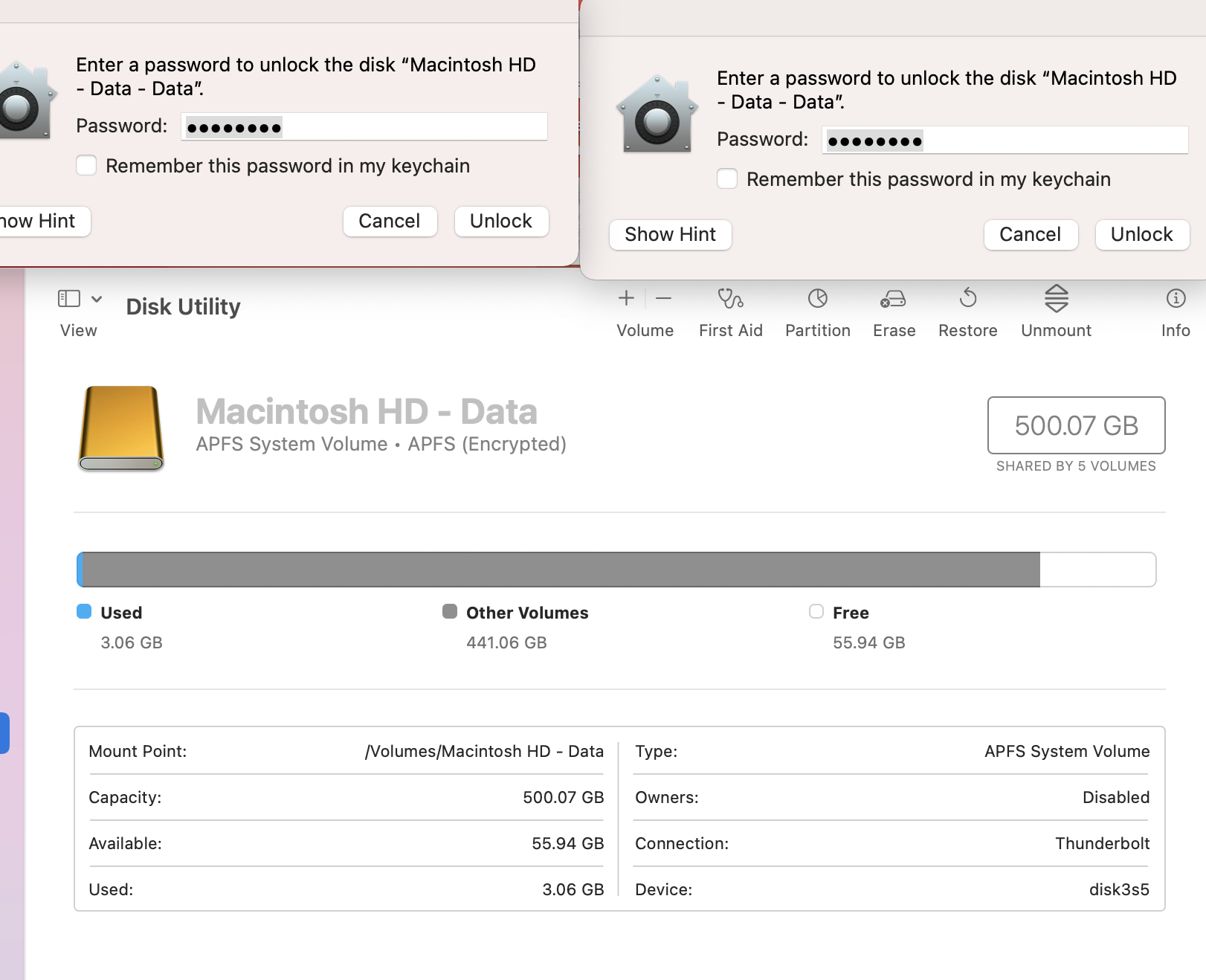
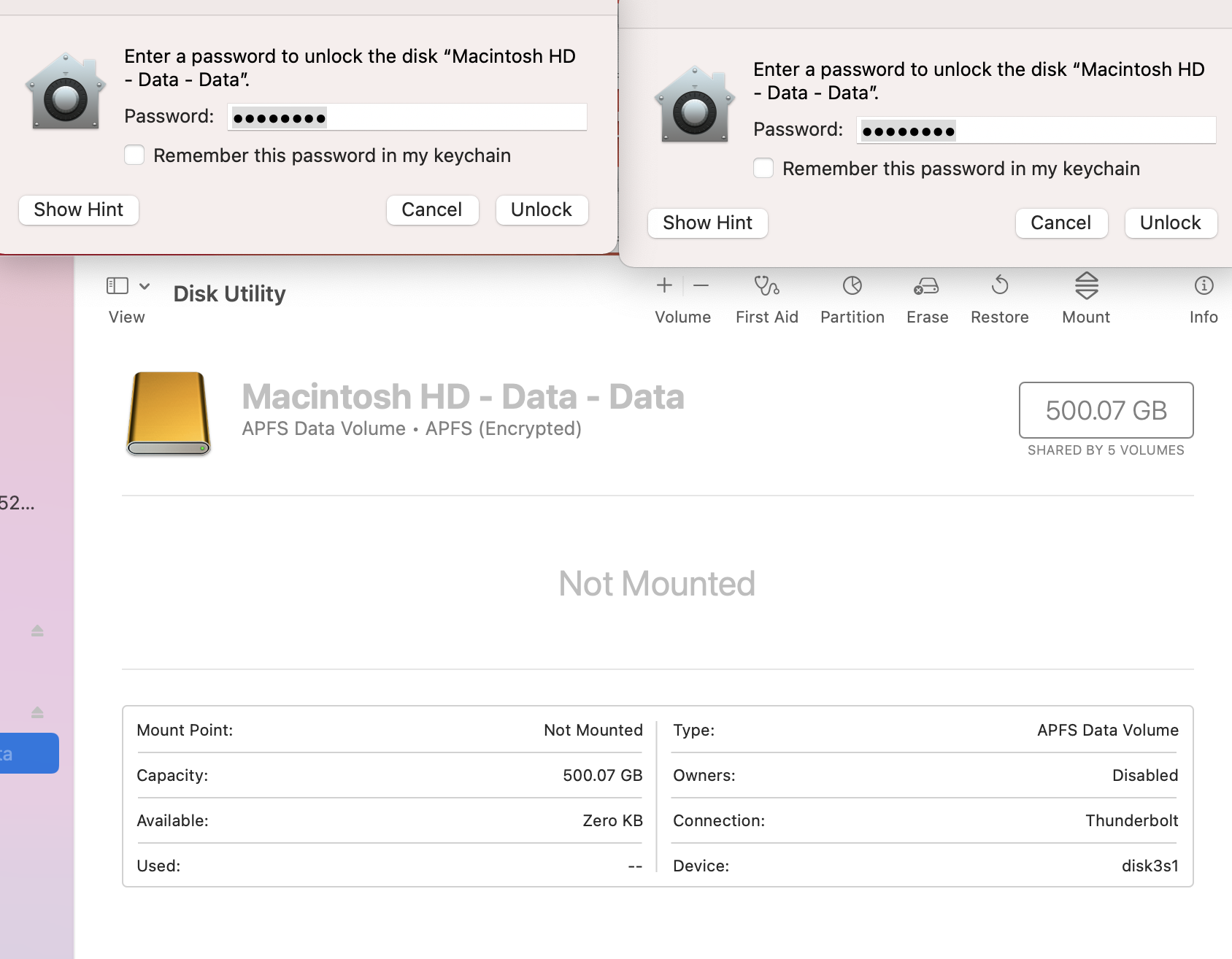
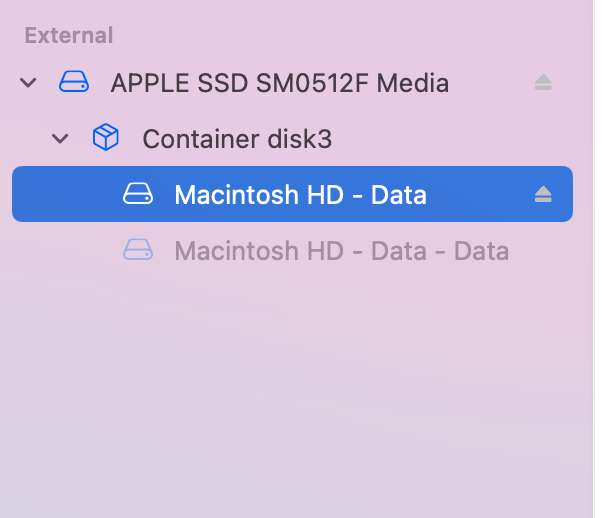
I guess if you have not messed up with the system too much (by purging NVRAM, SMC, etc like I did), by releasing enough space you've already solved the problem. Supposedly with enough space the 'upgrader' will go on and finish the job.


As I have wiped NVRAM, multiple times, I am currently stuck at:

Boot up then 'Command + R' Recovery: Do not take pwd, can not verify with iCloud, so dead end


Boot up then 'Option + Command + R' Internet Recovery: Do not take pwd, can not verify with iCloud, so dead end


Boot up then 'Shift + Option + Command + R' Recovery: Finally got into recovery mode, but: 1. disk utility refuse to mount the Macintosh HD Data, 2. I can not select any disk to reinstall the OS. (Install the Yosemite on a flash drive worked for me though. My Mac is a 2014 MacPro 15 so this Basic MacOS X installer might come with the Mac).


Boot up then 'Option': If I select Installer, then I ended up in infinite loop of rebooting... (doubt it might be messed up by resetting NVRAM, SO DO NOT RESET NVRAM). For once I've seen a question mark, where Apple told me to wipe NVRAM according to: https://support.apple.com/en-us/HT204323, kind of funny.


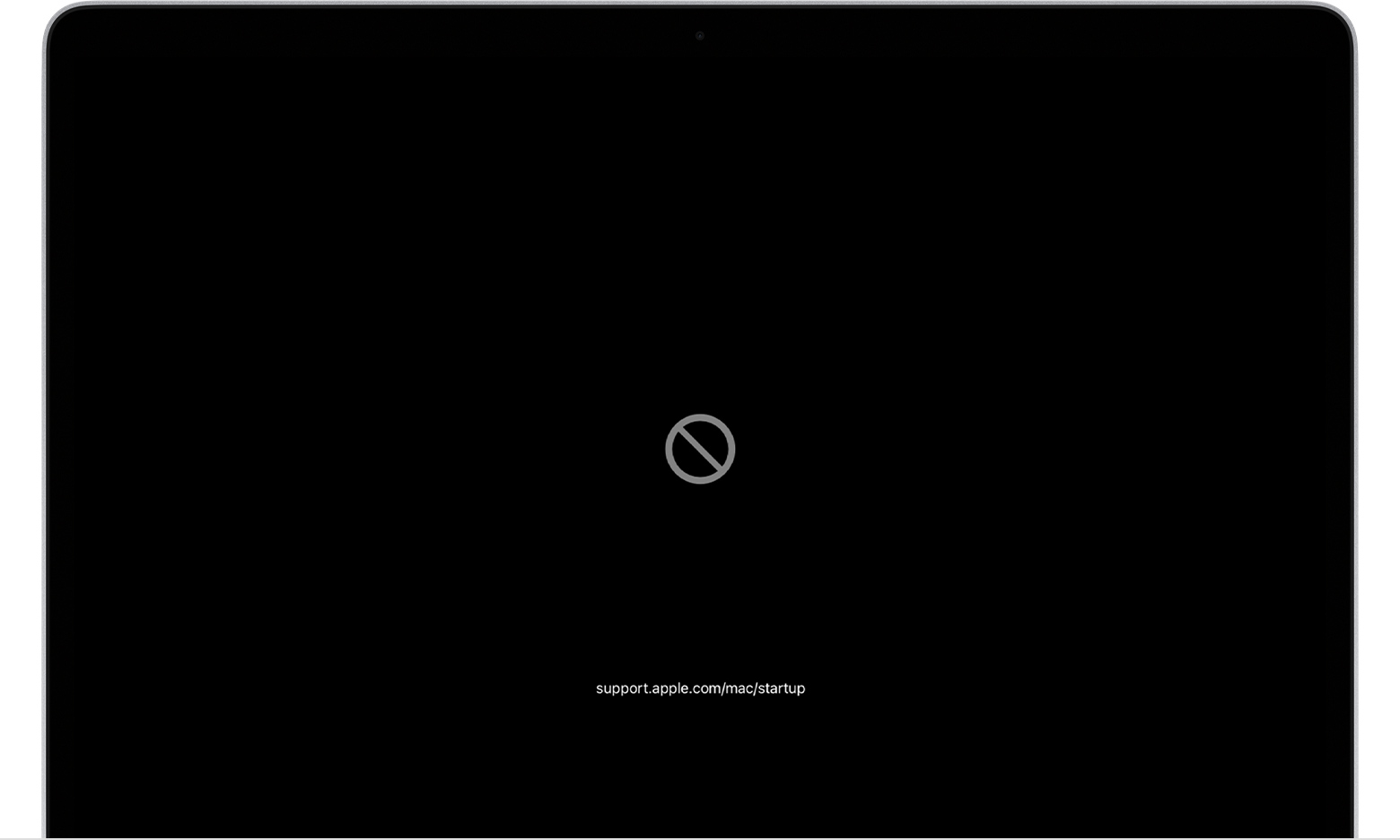
Boot up then 'Option': If I select to boot from Macintosh HD, then it shows a prohibited symbol: https://support.apple.com/en-us/HT210901. This is consistent since the upgrade.


At this point, with most of my data already been copied over using Disk Drill (apparently if you have a Mojave or lower the problem will become a lot easier, just follow previous posts), I am trying my best to recover the OS while avoid wiping out the old OS (either formatting the entire disk or formatting the System Volume Portion of Macintosh HD - Data).


Mar 28, 2021 5:06 PM in response to Tracybjazz

Hi Tracy,


That's strange it won't boot into safe mode. You mentioned the symbol for not allowed, you mean the circle with the line through it? It looks like this:


I have four things things you can try:

  1. Reset the SMC
  2. Reset NVRAM or PRAM
  3. Search for Disk Utility in Mojave and open it. Next, click First Aid in the menu bar to see if it finds anything wrong with your drive.
  4. Reinstall MacOS. Boot into recovery mode by holding down command r at boot and double click reinstall MacOS. This will reinstall just the operating system which should be Mojave and not touch your files.


After reinstalling MacOS Mojave you can the installation for Big Sur and hope it works.


Hope this helps.

Jan 4, 2021 3:08 PM in response to dineshbhongiri

Hi dineshbhongiri,


The prohibitory symbol means that your Mac has an operating system but it's not a version that your Mac can boot into. Could be something got corrupted during install which happens sometimes.


The solution is to boot into Recovery Mode and reinstall MacOS.

Press and hold the power button to turn off your Mac or until the screen turns off.

Next, turn on your Mac by pressing the power button and immediately hold down the following keys command r to start up from Recovery Mode.


Once in Recovery Mode, you can use disk utility to check the drive for any errors and then proceed to Reinstall MacOS.


Hope this helps

This thread has been closed by the system or the community team. You may vote for any posts you find helpful, or search the Community for additional answers.

An error occurred preparing the software update - Big Sur

Welcome to Apple Support Community
A forum where Apple customers help each other with their products. Get started with your Apple Account.